


A Better DECT Alternative for Hospitality: EnGenius Durafon Series
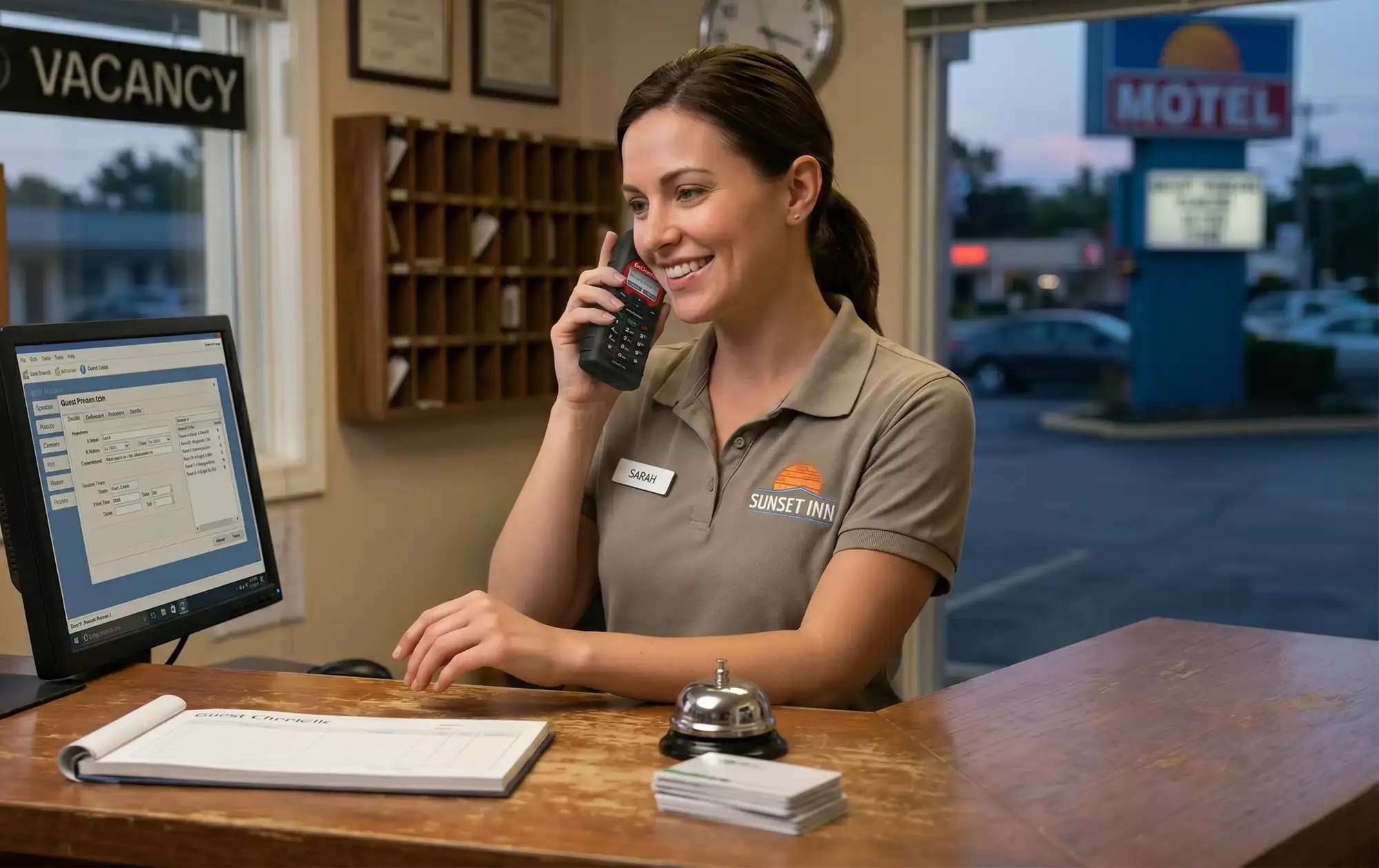
A Better Hotel Staff Communication System for Hospitality Teams
Guests never see your communication system. But they experience it in every interaction. They feel it when a room is ready on time, when a request is handled quickly, and when staff seem coordinated and responsive across the entire property. When communication is seamless, the experience feels effortless. When it isn’t, the gaps become visible fast.
What’s often overlooked is that many of these breakdowns are not caused by staffing or service intent, but by reliable staff communication systems. Many hotels still depend on a mix of cell phones, Wi-Fi-based devices, and legacy cordless technologies. While these tools may have worked in simpler environments, they often fall short in modern properties where reliable coverage, mobility, and real-time coordination are essential.
In this article, we’ll explore the communication challenges hotels face today, why traditional tools like cellular, Wi-Fi, and DECT systems often fall short, and what modern hospitality environments require to operate reliably and efficiently.
What is a hotel staff communication system?
A hotel staff communication system is a dedicated communication solution that helps hospitality teams coordinate across rooms, floors, service areas, and outdoor spaces. Unlike standard cell phones, Wi-Fi phones, or traditional DECT systems, purpose-built phone systems for hospitality are designed to support reliable coverage, team coordination, and fast response times across the property.
The Reality of Hotel Operations
Teams need access to real-time information to make decisions and act quickly. However, in large and distributed resorts and hotels, team visibility is difficult to maintain without reliable communication systems.
Hospitality relies heavily on multiple departments working in parallel, each contributing to ensure smooth operations and guest satisfaction. These teams are often distributed across the property and work in different areas with limited visibility on their colleagues’ activities.
This visibility gap makes communication a critical layer of operational infrastructure and when systems cannot bridge the gap effectively, coordination becomes extremely fragmented; resulting in slower response times, less predictable service delivery, and scenarios such as:
- Uncleaned rooms before designated check-in times
- Unknown maintenance and repair times
- Delayed or missed guest requests
- Inefficient efforts in chasing staff to relay information
Why Traditional Phone Systems for Hospitality Fall Short
Most hospitality facilities utilize a variety of dedicated phone systems such as Wi-Fi-based systems, DECT phones, work-designated cell phones, and legacy cordless phones. While these tools may work, many team members have shared their complaints and issues with these solutions. Let’s look into each popularly used team communication systems and understand their shortfalls.
Why Hotels Look for a DECT Alternatives
DECT-based cordless systems are a long-standing standard in enterprise communication and offer reliable voice quality within their coverage areas. However, many larger scale establishments find this system constrained by range. Each base station typically covers a 300-500ft radius and additional base stations and repeaters are required to maintain coverage. These repeaters extend range but also increase system cost and deployment complexity.
For hotels with multiple floors, distributed buildings, or outdoor service areas, the number of required repeaters can scale quickly. This not only raises upfront infrastructure costs but also adds to ongoing maintenance and management.
- Coverage typically limited to 300–500 feet per base/repeater
- Larger properties can be spending a premium with a denser infrastructure
- Higher deployment and maintenance costs
Why Wi-Fi Phones Are Unsuitable for Hospitality
Wi-Fi-based communication systems are often considered a modern alternative, but their effectiveness is directly tied to how the network is designed and deployed. In most hospitality environments, Wi-Fi infrastructure is optimized for guest use, prioritizing coverage in rooms, lobbies, and high-traffic areas rather than full property-wide staff mobility.
As a result, staff operating in outdoor spaces, back-of-house areas, or secondary facilities may experience inconsistent or limited connectivity. While it is possible to extend Wi-Fi coverage to support these areas, doing so typically requires additional access points and infrastructure upgrades, increasing both cost and deployment complexity.
- Coverage is dependent on existing Wi-Fi network design and priorities
- Limited reliability in outdoor or non-guest-facing areas
- Extending coverage often requires costly network upgrades and added infrastructure
Why Work Cellphones Are Insufficient
Cell phones are widely available and intuitive to use, making them a common fallback for staff communication. However, they are not designed as dedicated operational tools for hospitality environments. Usage must be regulated to ensure devices are used strictly for work purposes, which can be difficult to enforce across teams.
In addition, cellular signal strength can vary throughout a property. In areas with weak reception, communication becomes unreliable and response times suffer. Cell phones also lack built-in team communication features, often requiring third-party applications to enable group coordination, adding another layer of dependency and management.
- Dependence on cellular signal strength, which can be inconsistent across properties
- Requires third-party apps for team-based communication and coordination
- Not purpose-built or durable for continuous, work-specific use
What Hotels Actually Need from a Communication System
To support modern hospitality operations, communication systems must be designed around mobility, scale, and reliability. Staff are constantly moving across the property, and any delay in communication directly affects how quickly teams can respond and execute.
At a foundational level, hotels need consistent coverage across the entire property, not just guest-facing areas. This includes indoor spaces, back-of-house areas, and outdoor facilities. Communication must remain stable regardless of location, without relying on congested networks that prioritize guest connectivity.
Equally important is the ability to support real-time coordination. Teams need to connect instantly, whether it’s one-to-one communication, group-based coordination, or broadcast messaging. Without these capabilities, even well-trained teams are forced to rely on slower, less efficient workflows.
Front Desk and Concierge
Acts as the central coordination point and depends on direct access to mobile staff. Fast, reliable communication enables them to fulfill guest requests quickly and confirm service availability without multiple follow-ups.
Housekeeping
Requires immediate updates on room status and guest checkouts to adjust schedules in real time. Reliable communication allows teams to prioritize rooms more effectively and accelerate turnover without relying on manual coordination.
Maintenance
Needs to be reachable at all times to respond quickly to issues across the property. Instant communication ensures that problems are addressed without delay, reducing downtime, and minimizing guest disruption.
Valet, Security, and Outdoor Staff
Operate across parking areas, entrances, and outdoor facilities where traditional coverage may be limited. Consistent communication ensures they remain connected regardless of location, maintaining service continuity across the entire property.
Poolside, Dining, and Extended Service Areas
Require seamless connectivity beyond the main building. Reliable communication eliminates service gaps and ensures that staff can coordinate efficiently while exposed to outdoor elements such as water.
Why 900 MHz Phone Systems Are A Strong DECT Alternative for Hotel Staff Communication
To support modern hospitality operations, communication systems must deliver consistent coverage, mobility, and reliability across the entire property. Long-range wireless systems operating on 900 MHz are designed specifically for these conditions, offering advantages at both the signal and system level.
At a technical level, 900 MHz operates at a lower frequency than Wi-Fi (2.4, 5, 6 GHz) and DECT (1.9 GHz). This allows signals to travel farther and penetrate walls, floors, and obstacles more effectively. The result is broader, more consistent coverage across multi-floor buildings and outdoor areas with fewer infrastructure points.
Compared to popularly utilized solutions, 900 MHz systems provide clear operational advantages:
- Better range
900 MHz can often cover more distance from the base station, especially outdoors or in open indoor spaces. This is the biggest advantage. - Better wall and obstruction penetration
Lower-frequency signals tend to lose less energy passing through walls, shelving, doors, and other building materials. That can make 900 MHz useful in warehouses, barns, retail back rooms, garages, and older buildings. - Useful for low-density deployments
If you only need a few cordless handsets across a wide area, 900 MHz can be a strong fit. DECT’s advantages become more obvious when you need many handsets, clean channel management, and business-grade scalability. - Less competition with Wi-Fi than 2.4 GHz cordless phones
900 MHz does not overlap with 2.4 GHz Wi-Fi, so it avoids the classic 2.4 GHz cordless-phone-versus-Wi-Fi problem. DECT also avoids 2.4 GHz Wi-Fi because it uses about 1.9 GHz in North America, but 900 MHz still has the range advantage.
For a deeper technical breakdown of how 900 MHz communication works and why it outperforms other wireless technologies, you can explore our detailed guide on long-range wireless systems.
Comparing 900 MHz phone systems to DECT, Wi-Fi, and Cellphones:
| Phone type | Overall features | Key spec details | Best used for |
|---|---|---|---|
| 900 MHz phones | Long-range cordless calling with strong wall penetration. Simple and reliable for wide-area local coverage. | Typically strongest local range. Often 150–500 ft indoors and 300–1,000+ ft outdoors for consumer systems; industrial systems can go much farther. Uses lower-frequency 900 MHz spectrum, which helps through walls, metal, and distance. | Warehouses, farms, yards, large retail spaces, concrete/metal buildings, campuses, outbuildings, and sites where coverage is the main priority. |
| DECT phones | Balanced cordless phone option with good voice quality, reliability, and multi-handset support. | Commonly around 100–300 ft indoors and up to ~1,000 ft outdoors in ideal conditions. Uses dedicated cordless-phone spectrum, so it avoids Wi-Fi interference. | Homes, offices, clinics, front desks, small businesses, and everyday cordless calling where coverage needs are moderate. |
| Wi-Fi phones | VoIP calling over an existing Wi-Fi network with business phone features. Performance depends heavily on Wi-Fi quality. | Coverage is per access point: roughly 50–150 ft indoors and 150–300 ft outdoors, depending on band and AP placement. Needs strong roaming, QoS, and low interference for good calls. | Offices, schools, healthcare, hospitality, and businesses that already have a strong managed Wi-Fi network. |
| Cellphones | Most flexible option for mobility, apps, messaging, and calling beyond the property. | Coverage depends on carrier towers, signal bands, building materials, and plan. Can cover miles outdoors, but indoor coverage may be poor in basements, warehouses, or metal buildings. | Mobile workers, field teams, executives, off-site communication, and users who need to stay reachable anywhere. |
DuraFon & FreeStyl: Purpose-Built Phone Systems for Hospitality
EnGenius DuraFon is a long-range wireless communication system built on 900 MHz technology, designed specifically for enterprise, commercial, and industrial environments where reliable voice communication is critical. Unlike Wi-Fi or cellular-based solutions, it operates independently of existing networks, delivering consistent coverage across large, complex properties.
Additionally, the EnGenius Freestyl is another 900mhz phone system that has a proven success track record in hospitality environments with up to 250 rooms. In our latest case studies, property owners and staff have found the FreeStyl series to be the most effective where other conventional solutions failed.
If you are interested in learning more about our enterprise telephony solutions for hospitality, explore the full webinar to learn how long-range wireless systems are being deployed across modern hotel properties!
