
A Better Hotel Staff Communication System for Hospitality Teams
Guests never see your communication system. But they experience it in every interaction. They feel it when a room is ready on time, when a request is handled quickly, and when staff seem coordinated and responsive across the entire property. When communication is seamless, the experience feels effortless. When it isn’t, the gaps become visible fast.
What’s often overlooked is that many of these breakdowns are not caused by staffing or service intent, but by reliable staff communication systems. Many hotels still depend on a mix of cell phones, Wi-Fi-based devices, and legacy cordless technologies. While these tools may have worked in simpler environments, they often fall short in modern properties where reliable coverage, mobility, and real-time coordination are essential.
In this article, we’ll explore the communication challenges hotels face today, why traditional tools like cellular, Wi-Fi, and DECT systems often fall short, and what modern hospitality environments require to operate reliably and efficiently.
What is a hotel staff communication system?
A hotel staff communication system is a dedicated communication solution that helps hospitality teams coordinate across rooms, floors, service areas, and outdoor spaces. Unlike standard cell phones, Wi-Fi phones, or traditional DECT systems, purpose-built phone systems for hospitality are designed to support reliable coverage, team coordination, and fast response times across the property.
The Reality of Hotel Operations
Teams need access to real-time information to make decisions and act quickly. However, in large and distributed resorts and hotels, team visibility is difficult to maintain without reliable communication systems.
Hospitality relies heavily on multiple departments working in parallel, each contributing to ensure smooth operations and guest satisfaction. These teams are often distributed across the property and work in different areas with limited visibility on their colleagues’ activities.
This visibility gap makes communication a critical layer of operational infrastructure and when systems cannot bridge the gap effectively, coordination becomes extremely fragmented; resulting in slower response times, less predictable service delivery, and scenarios such as:
Why Traditional Phone Systems for Hospitality Fall Short
Most hospitality facilities utilize a variety of dedicated phone systems such as Wi-Fi-based systems, DECT phones, work-designated cell phones, and legacy cordless phones. While these tools may work, many team members have shared their complaints and issues with these solutions. Let’s look into each popularly used team communication systems and understand their shortfalls.
Why Hotels Look for a DECT Alternatives
DECT-based cordless systems are a long-standing standard in enterprise communication and offer reliable voice quality within their coverage areas. However, many larger scale establishments find this system constrained by range. Each base station typically covers a 300-500ft radius and additional base stations and repeaters are required to maintain coverage. These repeaters extend range but also increase system cost and deployment complexity.
For hotels with multiple floors, distributed buildings, or outdoor service areas, the number of required repeaters can scale quickly. This not only raises upfront infrastructure costs but also adds to ongoing maintenance and management.
Why Wi-Fi Phones Are Unsuitable for Hospitality
Wi-Fi-based communication systems are often considered a modern alternative, but their effectiveness is directly tied to how the network is designed and deployed. In most hospitality environments, Wi-Fi infrastructure is optimized for guest use, prioritizing coverage in rooms, lobbies, and high-traffic areas rather than full property-wide staff mobility.
As a result, staff operating in outdoor spaces, back-of-house areas, or secondary facilities may experience inconsistent or limited connectivity. While it is possible to extend Wi-Fi coverage to support these areas, doing so typically requires additional access points and infrastructure upgrades, increasing both cost and deployment complexity.
Why Work Cellphones Are Insufficient
Cell phones are widely available and intuitive to use, making them a common fallback for staff communication. However, they are not designed as dedicated operational tools for hospitality environments. Usage must be regulated to ensure devices are used strictly for work purposes, which can be difficult to enforce across teams.
In addition, cellular signal strength can vary throughout a property. In areas with weak reception, communication becomes unreliable and response times suffer. Cell phones also lack built-in team communication features, often requiring third-party applications to enable group coordination, adding another layer of dependency and management.
What Hotels Actually Need from a Communication System
To support modern hospitality operations, communication systems must be designed around mobility, scale, and reliability. Staff are constantly moving across the property, and any delay in communication directly affects how quickly teams can respond and execute.
At a foundational level, hotels need consistent coverage across the entire property, not just guest-facing areas. This includes indoor spaces, back-of-house areas, and outdoor facilities. Communication must remain stable regardless of location, without relying on congested networks that prioritize guest connectivity.
Equally important is the ability to support real-time coordination. Teams need to connect instantly, whether it’s one-to-one communication, group-based coordination, or broadcast messaging. Without these capabilities, even well-trained teams are forced to rely on slower, less efficient workflows.
Front Desk and Concierge
Acts as the central coordination point and depends on direct access to mobile staff. Fast, reliable communication enables them to fulfill guest requests quickly and confirm service availability without multiple follow-ups.
Housekeeping
Requires immediate updates on room status and guest checkouts to adjust schedules in real time. Reliable communication allows teams to prioritize rooms more effectively and accelerate turnover without relying on manual coordination.
Maintenance
Needs to be reachable at all times to respond quickly to issues across the property. Instant communication ensures that problems are addressed without delay, reducing downtime, and minimizing guest disruption.
Valet, Security, and Outdoor Staff
Operate across parking areas, entrances, and outdoor facilities where traditional coverage may be limited. Consistent communication ensures they remain connected regardless of location, maintaining service continuity across the entire property.
Poolside, Dining, and Extended Service Areas
Require seamless connectivity beyond the main building. Reliable communication eliminates service gaps and ensures that staff can coordinate efficiently while exposed to outdoor elements such as water.
Why 900 MHz Phone Systems Are A Strong DECT Alternative for Hotel Staff Communication
To support modern hospitality operations, communication systems must deliver consistent coverage, mobility, and reliability across the entire property. Long-range wireless systems operating on 900 MHz are designed specifically for these conditions, offering advantages at both the signal and system level.
At a technical level, 900 MHz operates at a lower frequency than Wi-Fi (2.4, 5, 6 GHz) and DECT (1.9 GHz). This allows signals to travel farther and penetrate walls, floors, and obstacles more effectively. The result is broader, more consistent coverage across multi-floor buildings and outdoor areas with fewer infrastructure points.
Compared to popularly utilized solutions, 900 MHz systems provide clear operational advantages:
For a deeper technical breakdown of how 900 MHz communication works and why it outperforms other wireless technologies, you can explore our detailed guide on long-range wireless systems.
Comparing 900 MHz phone systems to DECT, Wi-Fi, and Cellphones:
| Phone type | Overall features | Key spec details | Best used for |
|---|---|---|---|
| 900 MHz phones | Long-range cordless calling with strong wall penetration. Simple and reliable for wide-area local coverage. | Typically strongest local range. Often 150–500 ft indoors and 300–1,000+ ft outdoors for consumer systems; industrial systems can go much farther. Uses lower-frequency 900 MHz spectrum, which helps through walls, metal, and distance. | Warehouses, farms, yards, large retail spaces, concrete/metal buildings, campuses, outbuildings, and sites where coverage is the main priority. |
| DECT phones | Balanced cordless phone option with good voice quality, reliability, and multi-handset support. | Commonly around 100–300 ft indoors and up to ~1,000 ft outdoors in ideal conditions. Uses dedicated cordless-phone spectrum, so it avoids Wi-Fi interference. | Homes, offices, clinics, front desks, small businesses, and everyday cordless calling where coverage needs are moderate. |
| Wi-Fi phones | VoIP calling over an existing Wi-Fi network with business phone features. Performance depends heavily on Wi-Fi quality. | Coverage is per access point: roughly 50–150 ft indoors and 150–300 ft outdoors, depending on band and AP placement. Needs strong roaming, QoS, and low interference for good calls. | Offices, schools, healthcare, hospitality, and businesses that already have a strong managed Wi-Fi network. |
| Cellphones | Most flexible option for mobility, apps, messaging, and calling beyond the property. | Coverage depends on carrier towers, signal bands, building materials, and plan. Can cover miles outdoors, but indoor coverage may be poor in basements, warehouses, or metal buildings. | Mobile workers, field teams, executives, off-site communication, and users who need to stay reachable anywhere. |
EnGenius DuraFon is a long-range wireless communication system built on 900 MHz technology, designed specifically for enterprise, commercial, and industrial environments where reliable voice communication is critical. Unlike Wi-Fi or cellular-based solutions, it operates independently of existing networks, delivering consistent coverage across large, complex properties.
Additionally, the EnGenius Freestyl is another 900mhz phone system that has a proven success track record in hospitality environments with up to 250 rooms. In our latest case studies, property owners and staff have found the FreeStyl series to be the most effective where other conventional solutions failed.
If you are interested in learning more about our enterprise telephony solutions for hospitality, explore the full webinar to learn how long-range wireless systems are being deployed across modern hotel properties!

As organizations expand beyond traditional office walls, reliable connectivity has become a fundamental requirement in environments where fiber is impractical, cost-prohibitive, or physically impossible to deploy. From industrial campuses and remote facilities to smart cities and outdoor venues, modern networks must extend high-performance connectivity across long distances while maintaining security, uptime, and scalability.
This demand has accelerated the adoption of outdoor point-to-point wireless and outdoor broadband solutions. These technologies enable organizations to bridge buildings, connect remote assets, and deliver high-speed broadband where wired options fall short.
This article explores how outdoor point-to-point and outdoor broadband technologies work, the architectures that power them, and why they have become essential for modern outdoor wireless deployments.
The Shift from Wired Limitations to Wireless Bridge Infrastructure
Traditional wired connectivity relies heavily on trenching fiber or extending copper, both of which introduce significant cost, time, and regulatory complexity. In outdoor and remote environments, these challenges are amplified by terrain, distance, weather exposure, and right-of-way constraints. As a result, organizations increasingly seek alternatives that can deliver comparable performance without physical cabling.
Outdoor wireless solutions address these challenges by using highly directional radios and advanced modulation techniques to transmit data over the air with speed, reliability, and precision. When properly designed, these links deliver fiber-like performance while remaining flexible and rapidly deployable.
Key drivers and advantages of wireless bridging:
Rather than replacing wired networks entirely, outdoor wireless solutions complement existing infrastructure by extending connectivity where wires cannot reach.
What is a Wireless Bridge?
A wireless bridge uses radio frequency technology to connect separate networks or locations without physical cabling, creating a reliable, high-speed link where fiber or copper is impractical. Depending on the deployment objective, wireless bridges typically fall into two primary categories: point-to-point and outdoor broadband wireless.
Point-to-point (PtP) wireless bridge establishes a dedicated, high-capacity link between two fixed locations. These links are engineered for long-distance communication with minimal interference and predictable performance. They rely on precise antenna alignment, clear line of sight, and adaptive technologies like beamforming and bitrate control to maintain stability even under challenging outdoor conditions.
Outdoor broadband wireless builds on the foundation of point-to-point links but extends connectivity across multiple endpoints or wider areas. Using point-to-multipoint architectures, a central access point delivers broadband connectivity to several remote units, making it ideal for environments where coverage is as critical as dedicated links.
What Are Technologies Behind a Wireless Bridge?
Modern outdoor wireless solutions have advanced significantly due to improvements in radio design, signal processing, and network intelligence. These innovations allow wireless systems to deliver consistent, high-capacity connectivity in outdoor environments that were previously difficult to support. By combining precision RF engineering with adaptive software controls, outdoor wireless networks can maintain performance across long distances and variable conditions.
High-gain directional antennas focus radio energy into narrow transmission paths, reducing interference and improving signal strength between endpoints. When paired with efficient spectrum utilization and advanced modulation techniques, these systems achieve higher throughput and greater link stability, even in congested frequency bands or challenging RF environments.
Adaptive Modulation and Throughput Optimization
Adaptive modulation enables outdoor wireless links to automatically adjust transmission parameters based on real-time signal quality and environmental conditions. As weather patterns change or interference levels fluctuate, the system dynamically optimizes data rates to preserve link stability and availability.
By continuously balancing throughput and reliability, adaptive modulation minimizes packet loss and retransmissions while maximizing usable bandwidth. This allows outdoor point-to-point and multi-point to maintain consistent uptime and dependable performance in real-world deployments.
Network Resilience and Redundancy
Outdoor wireless infrastructure is often deployed in environments where connectivity is critical to operations. To support these use cases, modern systems incorporate resilience features such as intelligent link monitoring and support for redundant paths. These capabilities allow networks to detect performance degradation quickly and recover without prolonged outages.
Centralized visibility into link health enables proactive management and rapid troubleshooting across distributed outdoor networks. This resilient architecture ensures that outdoor wireless solutions can support mission-critical applications with high availability and operational confidence.
Real-World Wireless Bridge Applications
Wireless bridging technologies are increasingly deployed in environments where traditional wired networks are impractical. These solutions provide reliable, high-speed connectivity to remote or dispersed locations, enabling communication and data services in areas that were previously difficult to reach.
Common deployment scenarios include:
These real-world deployments demonstrate how outdoor wireless has evolved into a versatile and reliable solution, supporting both dedicated point-to-point connections and broader broadband coverage for modern connectivity needs.
The Future of Wireless Bridging Technology
Outdoor wireless technology continues to evolve as demand for high-speed connectivity expands into increasingly remote and complex environments. Innovations in radio design, spectrum utilization, and intelligent management are pushing performance closer to wired equivalence.
As adoption accelerates, outdoor point-to-point and outdoor broadband solutions are becoming foundational elements of modern network architectures rather than specialized alternatives. This maturity signals a shift where wireless is no longer constrained by distance or reliability concerns, but instead, serves as a strategic enabler of digital transformation.
Wireless Bridge Solutions from EnGenius
EnGenius delivers a comprehensive portfolio of outdoor point-to-point wireless bridging solutions designed to support high-performance connectivity across various environments. The portfolio includes the ENH500-AX and EnStation 6 for compact and cost-effective outdoor deployments, and the EOC Series for enterprise and service provider-grade applications. Together, these solutions enable scalable outdoor wireless architectures that balance performance, durability, and deployment flexibility.
Key capabilities across the EnGenius outdoor point-to-point portfolio include:
View Outdoor PtP Wireless Bridging Solutions >
Continue the Deep Dive: Watch the Full Webinar
This article highlights the core concepts behind outdoor point-to-point and outdoor broadband wireless. For a deeper technical discussion, real-world deployment insights, and architectural best practices, watch the full EnGenius webinar on outdoor wireless solutions.
Watch the webinar to explore how outdoor wireless connectivity is engineered for performance, reliability, and scale.
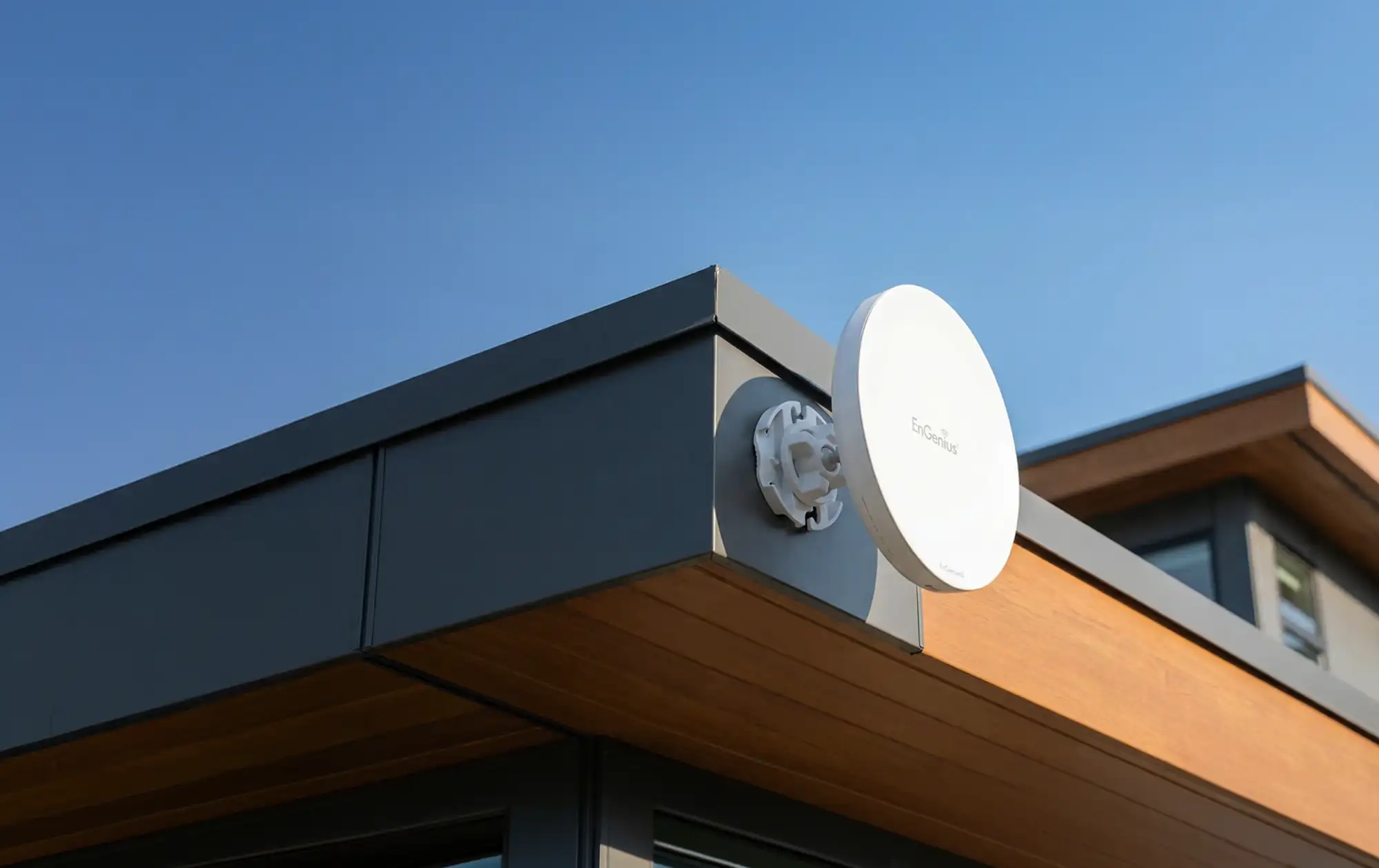
Why Homeowners Use Wireless Bridges for Detached Buildings
Modern homes increasingly include more than just a single structure. Detached garages, workshops, barns, guest houses, and backyard offices are becoming common across residential properties. As these spaces adopt security cameras, smart devices, and remote work equipment, reliable internet connectivity is needed far beyond the main house.
Running underground Ethernet or fiber between buildings can be expensive, disruptive, and sometimes impractical. A wireless bridge provides a simpler alternative by creating a dedicated building-to-building network connection without trenching cable. This article explains what a wireless bridge is, how a point-to-point wireless bridge works, when it makes sense for homeowners, and the advantages and limitations to consider before deployment.
What Is a Wireless Bridge?
A wireless bridge connects two separate buildings by transmitting network traffic over a dedicated outdoor wireless link. Instead of installing physical Ethernet or fiber cabling between structures, two bridge devices communicate directly with each other using high-performance radios and directional antennas.
From a networking perspective, the link functions much like a virtual Ethernet cable. Devices in the remote building operate as if they were connected directly to the main home network, allowing them to share the same internet connection and local network resources.
A wireless bridge can support a variety of connected devices in detached buildings, including:
How a Point-to-Point Wireless Bridge Works
A point-to-point wireless bridge creates a direct connection between two locations using paired outdoor bridge devices.
One bridge unit is installed on the main house and connected to the home router or network switch. A second bridge device is mounted on the remote structure, such as a garage or guest house. The two units are aligned so their antennas maintain a clear line-of-sight path, which allows the radios to establish a stable long-range wireless link.
Once connected, the bridge devices transmit network packets between buildings over a dedicated wireless channel. This link operates independently from the home’s indoor Wi-Fi network, reducing interference and maintaining consistent throughput. In practical terms, the remote building behaves as if it were connected directly to the main home network using a physical Ethernet cable.
Common Residential Wireless Bridge Use Cases
Wireless bridges are particularly useful for residential properties where running cable would require trenching, drilling, or crossing driveways and landscaping. They allow homeowners to extend a single internet connection across multiple structures while keeping everything on the same network.
Typical residential deployments include:
House to Barn or Workshop
Rural properties often include barns or workshops located hundreds of feet from the main house where reliable connectivity supports cameras, monitoring systems, or equipment automation.
Main House to Guest House or ADU
Accessory dwelling units and guest houses frequently require internet access but installing a second ISP connection can be costly and unnecessary.
Backyard Office or Studio
Remote work setups in backyard offices require stable, low-latency connectivity for video calls, cloud applications, and file transfers.
Benefits of Using a Wireless Bridge Instead of Running Cable
Installing underground Ethernet or fiber between buildings can involve trenching, conduit installation, and professional labor. In many situations, a wireless bridge provides a faster and more cost-effective method for extending connectivity across a property.
Key advantages include:
These advantages make wireless bridging one of the most practical networking solutions for detached buildings.
Limitations of Wireless Bridges
While a point-to-point wireless bridge can deliver excellent performance, it is important to understand its limitations. Because the connection relies on radio signals, the link requires a clear line-of-sight between the two devices. Physical obstacles such as trees, buildings, or terrain can weaken the signal and reduce performance.
Wireless bridges may also experience environmental interference from other wireless systems or heavy weather conditions. Proper device placement, antenna alignment, and selecting equipment designed for outdoor long-range operation are critical for maintaining stable connectivity.
Choosing the Right Outdoor Wireless Bridge Solution
Outdoor wireless bridges designed for building-to-building connectivity include specialized hardware and radio technologies that help maintain reliable performance across distance.
Purpose-built solutions, such as those offered by EnGenius Technologies, are engineered specifically for point-to-point wireless bridge deployments and include features designed to maintain stable links in outdoor environments.
Key capabilities often include:
These devices are typically mounted on the exterior of each building and aligned toward one another to establish a reliable wireless link.
Conclusion
Extending internet connectivity to detached buildings does not always require expensive trenching or additional service providers. A wireless bridge provides a practical way to connect garages, barns, guest houses, and backyard offices using a dedicated long-range wireless link. By understanding how point-to-point wireless bridges work and selecting the right outdoor equipment, homeowners can expand their network across their entire property while maintaining reliable connectivity for modern devices and applications.
Shop EnGenius PtP Wireless Bridges >
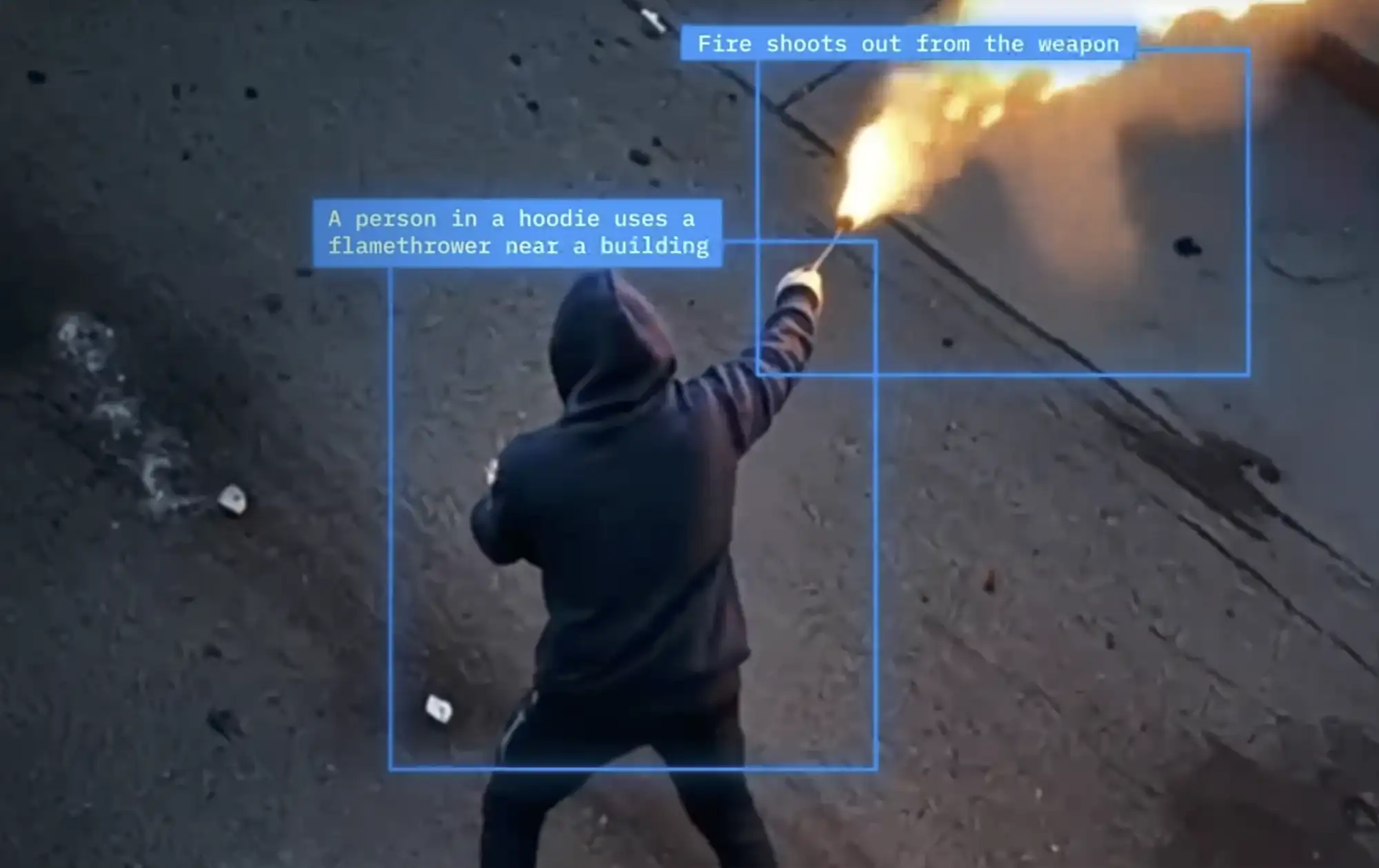
Video surveillance has evolved far beyond traditional CCTV systems. Modern organizations no longer view cameras as simple recording devices. Today’s security teams demand AI-powered surveillance systems that can analyze data in real time, provide actionable insights, and improve operational efficiency across multiple locations. This transformation is driven by a convergence of advanced technologies, including AI analytics, edge computing, hybrid storage architectures, and cloud connectivity. Together, these technologies enable faster responses, smarter decision-making, and proactive prevention of incidents, fundamentally redefining how organizations approach security.
From Traditional CCTV to Smart Surveillance
Legacy surveillance systems relied heavily on centralized servers and/or network video recorders. While sufficient for basic monitoring, these systems created operational challenges. A single server failure could compromise the entire network, continuous video streaming often overloaded bandwidth, and security teams spent hours manually reviewing footage. In contrast, modern smart video surveillance systems take a proactive approach to security by combining on-device intelligence with cloud-based analytics. This allows organizations to detect and respond to incidents as they happen rather than simply recording events for later review. These systems operate effectively across environments ranging from corporate campuses and retail locations to healthcare facilities, schools, and industrial sites where both security and operational efficiency are critical.
What is AI Security and Surveillance?
Modern AI-powered surveillance is defined by the integration of edge computing, local storage, and cloud services. Each layer serves a critical purpose in building a system that is both intelligent and scalable. By deploying AI and IoT devices at the edge, organizations capture data where it is generated, process critical insights in real time, and transmit only essential information to the cloud for further analysis. This layered approach ensures high performance, cost efficiency, and robust privacy, enabling organizations to create a proactive, future-ready security infrastructure.
Edge Computing: Intelligence at the Source of Data Generation
Edge computing brings AI directly to the camera or IoT device where raw data originates. By processing video streams locally, edge devices detect and interpret events instantly, sending only essential metadata to centralized systems. This reduces network load, minimizes latency, and ensures that security teams receive actionable alerts immediately. Edge AI is the foundation for proactive AI security systems because it transforms cameras from passive recording devices into intelligent nodes capable of autonomous decision-making.
Local Storage: Privacy and Resilience
Local storage provides an additional layer of security and operational reliability. By keeping video on the device, organizations reduce the risk of exposure to cyberattacks and simplify compliance with privacy regulations. Distributed storage ensures system resilience because each camera operates independently. If one device fails, the remaining cameras continue recording, eliminating the single points of failure inherent in legacy systems. Combined with edge AI, local storage allows organizations to protect sensitive data while still leveraging cloud-based intelligence.
Cloud Services: Centralized Management and Insights
While edge devices handle real-time detection, cloud services provide centralized management, long-term storage, and advanced analytics. By aggregating metadata from multiple devices, cloud systems enable security teams to detect patterns, analyze trends across locations, and conduct AI-driven searches for specific events. This combination of edge and cloud provides a scalable and flexible platform where all IoT devices and AI cameras feed information to generate smarter features, such as cross-camera tracking, federated learning, and predictive analytics. Smart video surveillance leverages this synergy to provide both speed and operational intelligence across entire networks.
AI-Driven Analytics: Turning Video Into Actionable Intelligence
The addition of AI transforms video surveillance from passive monitoring into proactive security management. AI systems interpret live video streams, generate actionable insights, and enable security teams to respond in real time. By combining these technologies such as object recognition, behavioral analysis, and metadata-driven workflows, AI surveillance ensures that critical events are never missed while significantly reducing manual review efforts.
Object Recognition and Behavioral Analysis
Modern AI cameras detect and analyze specific objects and behaviors, moving beyond basic motion detection. These systems can identify individuals, vehicles, and activities in context, enabling security teams to respond quickly and accurately. This capability represents a major advancement over traditional object detection because it provides detailed situational awareness rather than isolated alerts.
Natural Language Search and Metadata Utilization
Manual video review is time-consuming and prone to errors. AI surveillance eliminates this inefficiency by using structured metadata instead of full video streams. Teams can search for events using natural language commands, retrieving precise footage in seconds. This capability is invaluable for investigations, compliance, and real-time incident response.
Proactive Incident Detection
AI surveillance does more than recognize objects. By analyzing behavior and context, AI systems anticipate potential risks and alert teams before incidents occur. This predictive capability enhances safety, reduces operational risk, and allows security teams to intervene quickly.
What are the Operational Advantages of AI Surveillance?
AI surveillance provides operational benefits that extend beyond security alone. By integrating intelligent analytics with edge computing and cloud management, organizations can improve response times, streamline investigations, scale multi-site operations, and optimize costs. These advantages enable security teams to operate more efficiently while maintaining high standards of safety and compliance.
Real-World AI Surveillance Applications
AI-powered surveillance is transforming operations across sectors by providing actionable insights that improve safety, compliance, and efficiency. Organizations can tailor AI capabilities to their specific use cases, maximizing impact while minimizing costs.
Privacy, Compliance, and Resilience
Modern surveillance systems must protect privacy without compromising operational effectiveness. Edge AI ensures sensitive data remains on-site, local storage enhances security, and cloud management allows centralized control with role-based access. Distributed architecture ensures resilience, while proactive monitoring and analytics support compliance with industry standards. Integrating these layers ensures both privacy and actionable intelligence in one unified system.
Future Trends in AI Surveillance
Surveillance technology is evolving rapidly. Innovations are driving smarter, more predictive, and more intuitive systems that extend operational capabilities. AI security systems continue to mature, incorporating multi-modal analytics, natural language interfaces, and autonomous monitoring to enhance outcomes in real-world deployments.
AI Surveillance Solutions From EnGenius
EnGenius offers an expanding portfolio of AI-powered surveillance solutions designed to support modern security requirements across diverse environments. From intelligent AI surveillance cameras and enterprise-grade NVRs to a centralized cloud management platform, EnGenius enables smart video surveillance that delivers real-time insights, streamlined deployment, and scalable control. Edge-based AI analytics, metadata-driven search, and cloud-enabled management allow organizations to move beyond passive monitoring and deploy AI security systems tailored to their specific operational needs.
Explore our AI Surveillance Solutions >
Further Learning: Watch the Full Webinar
Interested in learning how EnGenius can modernize your security and surveillance operations? For a deeper exploration of hybrid AI surveillance, including real-time analytics, natural language search, and advanced metadata workflows, watch the EnGenius AI Cloud Surveillance webinar below.

The Shift to Proactive AI Surveillance
The security and surveillance industry is evolving rapidly as AI technologies transform how organizations can monitor, detect, and respond to incidents. Traditional CCTV systems primarily functioned as passive recording tools, capturing footage that security teams reviewed only after an incident occurred. While this approach provided valuable evidence, it required significant manual effort and offered little to no capabilities to intervene before situations escalate.
Modern AI-powered surveillance systems fundamentally change this model by analyzing video streams in real time. Using computer vision and machine learning algorithms, AI surveillance platforms can identify unusual behaviors autonomously while triggering alerts the moment these events occur. In this article, we’ll explore the core features of AI surveillance, the role of edge AI and cloud AI surveillance architectures, and the emerging technologies that are redefining intelligent video monitoring.
Edge AI vs Cloud AI in AI Surveillance Systems
Modern AI surveillance systems rely on a hybrid architecture that combines Edge AI cameras with Cloud AI management platforms. Each layer performs a different role in processing, analyzing, and organizing surveillance data.
Edge AI cameras analyze video directly on the device, enabling instant detection and alerts without relying on the cloud. This approach ensures low latency responses and allows systems to continue operating even if the network connection is interrupted.
Cloud AI platforms complement this capability by aggregating data from multiple cameras and locations, enabling centralized monitoring, advanced analytics, and long-term trend analysis across an entire surveillance network.
Rather than separate technological entities, edge and cloud AI work together to create a scalable AI surveillance ecosystem where real-time detection occurs locally while network-wide intelligence is delivered through the cloud.
| Capability | Edge AI Cameras | Cloud AI Platform |
|---|---|---|
| Primary Objective | Real-time event detection | Centralized analysis and management |
| Processing Location | On-camera AI processors | Cloud-based computing infrastructure |
| Response Speed | Instant alerts with minimal latency | Slightly higher latency but broader context |
| Connectivity Dependence | Can operate during internet outages | Requires internet connectivity |
| Data Scope | Individual camera analytics | Multi-camera and multi-site analytics |
| Best Use Cases | Object detection, motion alerts, local monitoring | Cross-camera tracking, historical analysis, centralized dashboards |
Understanding the core analytics capabilities of AI surveillance platforms is essential for organizations evaluating modern security technologies. These features enable cameras and monitoring systems to interpret visual data automatically, dramatically reducing the need for constant manual observation while improving detection accuracy.
Object Detection and Classification
AI surveillance cameras can identify and categorize objects within a video frame, allowing the system to differentiate meaningful activity from environmental noise.
License Plate Recognition (LPR)
License Plate Recognition technology allows AI surveillance systems to automatically identify vehicles entering or leaving a monitored environment.
Facial Recognition
Facial recognition enables AI surveillance platforms to identify individuals by matching detected faces against stored watchlists or identity databases.
Behavioral and Anomaly Detection
Leveraging genAI and computer vision, smart surveillance has the ability to analyze patterns of activity and detect unusual behavior automatically.
Occupancy and Crowd Monitoring
Surveillance Camera AI can also provide operational insights by analyzing crowd density and movement patterns in real time.
Advanced Surveillance Camera AI Innovations from EnGenius
While many security platforms offer foundational AI analytics, emerging innovations are expanding what AI surveillance systems can achieve. EnGenius Technologies is introducing several advanced capabilities designed to streamline investigations, improve detection accuracy, and reduce operational workload for security teams.
Smart AI Search
Powered by generative AI, this tool dramatically accelerates investigations by allowing operators to search video footage using descriptive attributes. Instead of manually reviewing hours of recordings and referencing error-prone time stamps, security teams can locate relevant footage by searching for individuals, vehicles, objects, or activities.
Software-Defined Alerts
Security and IT administrators gain the ability to configure and customize event triggers tailored to their operational environment. By defining specific behaviors or conditions that warrant attention, organizations can receive precise alerts that minimize unnecessary notifications and false alarms while ensuring that critical events are immediately flagged.
Visual Timeline Tracking
Operating in tandem with Smart AI Search, this feature provides a chronological view of a subject’s movement across the entire surveillance system. This capability eliminates the need to manually stitch together footage from separate cameras and allows operators to quickly reconstruct the path of an individual throughout a property.
Generative AI Facial Recognition
Enhance identity detection by leveraging generative AI models that interpret multiple viewing angles from a single reference image. This approach improves recognition accuracy across different camera perspectives and enables more reliable tracking of individuals moving through a surveillance network.
These innovations represent a new phase in AI surveillance where systems are not only capable of detecting incidents but also accelerating investigations and delivering deeper operational intelligence.
Industry Applications for AI Surveillance
AI surveillance is being rapidly adopted across industries that require continuous monitoring of complex environments. Organizations managing high traffic areas, sensitive assets, or distributed locations benefit significantly from automated video analytics.
Retail
Businesses use AI surveillance to deter and reduce theft while gaining accurate data to monitor in-store activity and traffic patterns.
Healthcare
Facilities such as assisted living rely on intelligent monitoring to ensure patient safety, provide improved assistance, protect restricted medical areas, and reduce response times.
Hospitality
Hotels and resorts rely on AI surveillance to protect guests and staff while maintaining a seamless and welcoming environment.
MDU
Property managers use AI surveillance to enhance tenant safety and maintain secure residential environments across shared spaces.
Education
Schools and university campuses use AI surveillance to strengthen campus safety and improve situational awareness for security teams.
Government and Smart Cities
Municipal governments and smart city initiatives deploy AI surveillance to monitor traffic, public infrastructure, and large public events.
Across these industries, AI surveillance enables organizations to analyze vast amounts of visual data automatically, ensuring security teams focus only on events that require human intervention.
Conclusion
AI surveillance is transforming traditional video monitoring into an intelligent security infrastructure capable of detecting threats, identifying anomalies, and delivering actionable insights in real time. By combining edge AI cameras with cloud-powered analytics, organizations gain faster alerts, improved visibility across locations, and significantly more efficient investigative workflows. As AI technologies continue to advance, intelligent surveillance systems will play an increasingly important role in protecting people, assets, and operations across modern organizations.
Featured AI Surveillance Solutions by EnGenius
EnGenius AI Cloud Surveillance provides organizations with a modern security platform designed to simplify deployment, improve operational visibility, and scale easily across multiple locations. By combining our ECC Series AI cameras with our centralized cloud management, EnGenius Cloud, security teams gain access to real-time alerts, reduced response times, and maintain consistent oversight without the complexity of traditional on-premise surveillance infrastructure.
Explore the full lineup of EnGenius AI surveillance solutions >

Intel’s Architectural Advances for AI, HPC, and Cloud-Native Compute
Intel’s latest Xeon® 6 processors represent a significant shift to prioritizing the importance of scaling server resources to address AI, HPC, and cloud-native infrastructure demands. Released in two architectures codenamed Sierra Forest (P-cores) and Granite Rapids (E-cores), Intel Xeon 6 introduces a new generation of performance scaling, throughput efficiency, and AI acceleration. In this article, we’ll explore the key features of Intel Xeon 6 and how it aims to streamline modern data center workloads.
P-Core Architecture: Performance-Optimized for AI & HPC
As noted in the introduction, the Intel® Xeon® 6 family consists of two distinct architectures. The Intel Xeon 6500P and 6700P Series (Sierra Forest) delivers high per-core performance for workloads that demand intensive throughput, low latency, and built-in AI acceleration. With support for up to 128 P-cores per processor, the P-core models are engineered for AI training and inferencing, HPC simulations, real-time analytics, and large-scale data processing applications.
Native AI Acceleration
These P-core processors integrate Intel® AMX (Advanced Matrix Extensions) and Intel® AVX-512, providing hardware-level acceleration for matrix operations found commonly in deep learning inference, natural language processing, and computer vision workloads. With these on-chip AI capabilities, it reduces the need for a dedicated discrete accelerator for various workloads that may only require lite AI inferencing. Applications that benefit from this architecture include LLM/SLM, modeling and simulations, and other resource-intensive AI tasks.

E-Core Architecture: Efficiency-Optimized for Cloud-Scale Operations
Unlike the P-Core architecture, the Intel® Xeon® 6700E Series (Granite Rapids) prioritizes core density and power efficiency for cloud-native infrastructures. With up to 144 E-cores per processor, these Intel Xeon 6 processors are optimized for containerized microservices architectures, multi-tenant virtualization, and web-scale hosting.
E-cores enable organizations to consolidate thousands of lightweight workloads with significantly improved performance-per-watt metrics over its previous generations. This is ideal for cloud service providers (CSP), digital service providers (DSP), and related enterprises running distributed applications who value high compute density and optimized total cost of ownership (TCO).
| Feature | P-Core (Sierra Forest) | E-Core (Granite Rapids) |
|---|---|---|
| Series | Intel® Xeon® 6500/6700P | Intel® Xeon® 6700E |
| Maximum Cores | Up to 128 cores | Up to 144 cores |
| Design Focus | High per-core performance | High core density & efficiency |
| AI Acceleration | Intel® AMX + AVX-512 | - |
| Primary Workloads | AI inference, HPC, analytics | Microservices, containers, virtualization |
| Performance Profile | Deterministic, low-latency | Massively parallel, high-throughput |
| Power Optimization | Performance-focused | Performance-per-watt optimized |
| Ideal Use Cases | LLM inference, scientific simulation, financial modeling | Kubernetes clusters, web serving, edge computing |
DDR5 Memory & PCIe Gen 5 Architecture for Modern Data Center Workloads
Intel Xeon 6 processors are designed to address current server bandwidth constraints and demands of data-intensive workloads through the latest generation of memory and PCIe lanes. Each processor supports DDR5 memory across 8 memory channels, with up to 4TB maximum memory per socket and ECC support for data integrity. Dual-socket configurations can accommodate 32 DDR5 DIMMs, providing the low-latency, high-bandwidth requirements for large datasets and real-time analytics.
Each Xeon 6 processor provides support for up to 88 PCIe Gen 5 lanes. When compared to its previous generation, PCIe Gen 5 doubles throughput by delivering 32 GT/s compared to 16 GT/s per lane. This bandwidth is critical for supporting AI accelerations, GPUs, SmartNICs, and various add-on expansion cards without creating performance bottlenecks or limitations.
Built-In Security with TDX 2.0 and SGX
As cybersecurity becomes a top priority in the tech industry, especially regarding sensitive data, the Xeon 6 platform has silicon-level protection designed for confidential computing environments. Intel® TDX 2.0 (Trust Domain Extensions) provides hardware-isolated virtual machines and containers, protecting workloads from privileged software layers including hypervisors and operating systems. This enables secure multi-tenant cloud deployments where data must remain encrypted and isolated even during processing.
Intel® SGX (Software Guard Extensions) extends cybersecurity to the application level through memory encryption and isolation. SGX protects cryptographic keys, proprietary AI models, and sensitive data within secure enclaves, supporting Zero Trust architectures and helping organizations meet regulatory compliance requirements. Together, these capabilities address the security demands of regulated industries, multi-tenant cloud platforms, and organizations implementing defense-in-depth security strategies.
Platform-Level Efficiency & Performance Improvements
According to Intel’s own benchmarking highlights, Xeon 6 is an architectural leap in overall performance and AI acceleration when compared to previous generation Xeon processors. These improvements position Xeon 6 as a leading data center processor capable of supporting modern AI inference and training workloads, distributed cloud infrastructures, and growing HPC workloads while maintaining relatively low TCO.

Conclusion
The Intel® Xeon® 6 processor family provides a flexible, performance-tuned architecture for next-generation data center infrastructure. Whether deployed with high-performance P-cores for AI and HPC, or high-density E-cores for cloud-native workloads, Xeon 6 delivers the architectural capabilities required for modern data center applications.

Explore Intel® Xeon® 6 Servers from EnGenius
EnGenius S Series servers are engineered around dual Intel® Xeon® 6 processors to deliver balanced, high-efficiency compute for AI inference and training, cloud-native microservices, and HPC workloads. Designed to meet diverse data center performance requirements, the S11 and S21 server series supports multiple Intel Xeon 6 platforms including the 6700E, 6500P, and 6700P series for optimized configuration based on the deployment workload.
Learn more about the EnGenius S Server Series >
FAQs
What is the Intel® Xeon® 6 processor?
Intel® Xeon® 6 is the newest generation of Intel’s data center CPU platform, designed to meet the expanding compute demands of AI, high-performance computing (HPC), and large-scale cloud-native workloads. The Xeon 6 family introduces two distinct architectures, P-cores (Sierra Forest) and E-cores (Granite Rapids), each optimized for different performance requirements. Together, they provide major advancements in compute density, AI acceleration, DDR5 memory bandwidth, and PCIe Gen 5 connectivity, enabling modern data centers to scale more efficiently while reducing overall operational costs.
What is the difference between P-core and E-core Xeon 6 processors?
While both architectures belong to the same Xeon 6 family, they are designed to solve different performance challenges. P-core processors (6500P and 6700P Series) focus on delivering high per-core performance and low-latency execution for workloads such as AI inference, HPC simulations, and real-time analytics. They include Intel® AMX and AVX-512 acceleration, which significantly improves deep learning and vectorized compute tasks.
On the other hand, E-core processors (6700E Series) prioritize compute density and energy efficiency for cloud-native environments. With up to 144 E-cores per processor, they are optimized for distributed applications, containerized microservices, and multi-tenant virtualized workloads that benefit from high throughput rather than high per-core speed.
In short, P-cores target performance-critical workloads, while E-cores maximize efficiency and scalability for cloud and edge environments. Refer to the image from Intel above to understand which Intel Xeon 6 architecture is optimized for the workload.
What is the difference between 5th Gen Intel Xeon and Intel Xeon 6?
Intel® Xeon® 6 is the latest offering and is the direct successor to 5th Gen Intel® Xeon® Scalable processors. The new platform delivers substantially higher core counts, introduction of dedicated P-core or E-core architectures, and improves memory bandwidth through expanded DDR5 support. Xeon 6 also integrates PCIe Gen 5 for faster connectivity and supports higher system density, allowing operators to consolidate more workloads per server.
Intel’s own benchmarks report notable gains in AI performance, server consolidation ratios, and overall performance-per-watt efficiency. These enhancements make Xeon 6 more capable of handling modern AI pipelines, high-volume cloud applications, and advanced HPC workloads than the previous generation.

The shift to Wi-Fi 7 is underway, promising higher throughput, lower latency, and more efficient use of spectrum. Until recently, these benefits were primarily associated with premium enterprise solutions. The EnGenius ECW520 access point changes that equation by offering tri-band Wi-Fi 7 powered by a Qualcomm chipset at an accessible price point.
Wi-Fi 7 in a Compact Form
Wi-Fi 7 (802.11be) introduces several improvements over Wi-Fi 6/6E, including wider channels, improved modulation, and more efficient multi-link operation. For small and medium-sized businesses, these changes translate into faster data rates, smoother multi-device performance, and improved reliability in dense environments.
The ECW520 implements these features in a tri-band design, ensuring compatibility with legacy devices while providing future-ready connectivity for Wi-Fi 7-capable endpoints.
Coverage and Capacity
A single ECW520 is rated to cover up to 1,250 square feet and support 500+ connected devices. This makes it suitable for environments such as:
By combining range and high client capacity, the ECW520 can either serve as a standalone solution in smaller spaces or as part of a multi-AP deployment in larger facilities.

Installation and Management
Deployment is simplified through the EnGenius Cloud To-Go mobile app, which allows administrators or installers to configure and monitor the device directly from a smartphone. For ongoing management, the AP integrates with EnGenius Cloud, a license-free platform that provides centralized visibility, monitoring, and configuration without recurring subscription costs.
This model makes it easier for IT staff or managed service providers to maintain networks across multiple locations without additional licensing overhead.

Reliability and Support
The ECW520 is backed by a five-year hardware warranty, reflecting an emphasis on long-term reliability. Combined with automatic firmware and security updates from EnGenius Cloud, the access point is designed to remain a stable component of business infrastructure over time.
Practical Value
The ECW520 incorporates enterprise-grade hardware and management features more commonly found in higher-priced models. The lower cost of entry allows organizations with limited budgets—such as small businesses or property managers—to deploy modern Wi-Fi 7 networks while still maintaining scalability.
Conclusion
The EnGenius ECW520 offers a practical path to adopting Wi-Fi 7. With tri-band support, straightforward cloud management, and coverage for up to 500+ devices, it bridges the gap between cost-sensitive deployments and advanced wireless performance. For businesses evaluating how to prepare for the next generation of connectivity, the ECW520 provides an accessible option without compromising core technical capabilities.

Ever tried scrubbing through hours of security footage just to find one five-second clip? Painful, right? That’s exactly the problem EnGenius set out to solve with the ECC500 AI Camera.
This isn’t your typical “set it and forget it” camera. It’s more like a smart assistant that actually helps you find what you’re looking for—without wasting half your day.
Multiple Faces, Zero Hassle
Most systems can only focus on one person at a time. The ECC500? It can recognize multiple faces at once, even if your lobby’s packed or your store is bustling with customers. Think of it like having extra eyes that never get tired or confused.
One Timeline, Every Step
Here’s the magic: instead of flipping through different feeds and timestamps, you get one clean timeline.
• Want to see where someone went? Done.
• Need to know what they were doing at each spot? Easy.
• Looking for a clip or snapshot? Just click—it’s there.
It’s like scrolling through someone’s “story,” only instead of social media, it’s your security system.

Just Upload a Photo
Have a picture of someone you need to find? Upload it. The ECC500 will scan across all your cameras and show you every time that person pops up.
See their face in one clip? Click it, and every appearance across your coverage area shows up instantly. Investigations that used to drag on for hours can now wrap up in minutes.

Reports in Seconds
And when it’s time to share findings? Forget manually piecing things together. The system can export a full tracking summary in seconds—ready for your team, your boss, or law enforcement.
Instant Alerts with POI & Tags
The ECC500 makes face recognition smarter and more practical with instant alerts using POI and tags. Simply tag individuals or mark them as Persons of Interest, and you’ll get notified the moment they appear on camera. Whether it’s greeting loyal customers as they walk in or staying aware when restricted individuals show up, the ECC500 keeps you one step ahead and in control.

Smarter Security, Less Stress
At the end of the day, the ECC500 isn’t just a camera—it’s a smarter way to handle security. Whether it’s a busy retail store, a hotel lobby, or a corporate office, it saves you time, clears up confusion, and helps you respond faster when it matters most.
Because security shouldn’t be complicated. It should just work.
Have Questions? Contact Sales >

As wireless connectivity becomes the default method of access for everything from laptops to IoT sensors, managing what wireless clients can and cannot reach on your network is more critical than ever. In modern environments, the ability to control how Wi-Fi devices interact with wired infrastructure and external resources isn’t just a nice-to-have — it’s a security must. This is where the Layer 3 (L3) outbound firewall comes into play.
Why L3 Outbound Firewall Rules Matter
Wireless traffic tends to be more dynamic and potentially less secure than traffic on a wired network. Guests, BYOD (Bring Your Own Device) users, and IoT gadgets often connect through Wi-Fi — many of which you may not fully trust. Without control over outbound communication, these devices could probe or access sensitive wired systems, creating a significant security risk.
The Layer 3 outbound firewall allows network administrators to enforce outbound traffic policies for wireless clients, limiting what destinations they can reach — whether it’s preventing access to private network segments or restricting communication with specific IP addresses. The result is a safer, more manageable network that respects security boundaries while still offering flexibility.
How L3 Outbound Firewall Rules Work
Layer 3 firewall rules are used to evaluate outbound traffic — that is, traffic originating from wireless clients and destined for the wired LAN or the Internet. Here’s how the mechanism works:
This approach enables granular control while maintaining high performance on wireless networks.
Real-World Use Case: Hospitality Wi-Fi
In hospitality — where hundreds or even thousands of guests connect to the Wi-Fi each day — the need for traffic control is even more urgent. Hotels, resorts, and conference centers typically operate both guest and staff networks across shared infrastructure. Here’s how Layer 3 outbound firewall rules help:
1. Protecting the Back Office: With the “Deny Private Address” rule in place, guests on public SSIDs can’t access the hotel’s private IP ranges where back-office systems like PMS (Property Management System), POS (Point of Sale), security cameras, or staff workstations reside. This helps avoid accidental — or intentional — breaches.
2. Securing IoT Devices: Hotels are increasingly using IoT devices for smart room controls, HVAC systems, and digital signage. A guest’s smartphone or laptop should never be able to communicate directly with these devices unless specifically permitted. L3 firewall rules ensure that IoT traffic remains isolated.
3. Guest Isolation with Internet Access: Most guests simply want Internet access. With a default deny rule for private IPs, guests can stream, browse, and email without being able to reach other rooms’ devices, internal servers, or anything else on the LAN — a key requirement for guest privacy and PCI compliance.
4. Flexible Exceptions for Services: Need to allow a specific wireless printer, in-room device, or internal captive portal? No problem. Just add a Layer 3 rule to allow access to that specific IP or subnet — placed above the private address deny rule — and keep the rest of the network locked down.
Layer 3 outbound firewalls provide a low-overhead way to enforce network segmentation without additional hardware or complex VLAN configurations.

Deny Private Address Setting: A Smart Default
One particularly useful built-in rule is the “Deny Private Address” setting. This rule focuses on traffic destined for RFC1918 private IP ranges:
• 172.16.0.0/12
• 192.168.0.0/16
By denying traffic from wireless clients to these address blocks, you can effectively isolate Wi-Fi users from the rest of the internal network — perfect for guest or public-facing SSIDs.
How to Configure the Private Address Deny Rule
2. Click the Edit button.
3. Locate the row where Destination is Private Address.
4. Change the Policy from Allow to Deny.
5. Click Apply at the top right to save the configuration.
Making Exceptions with Custom Rules
If wireless clients need to reach specific internal services, you can add custom allow rules above the deny rule. For example:
• Permit staff devices to access a POS system while keeping guest traffic isolated.
Example: Blocking a Subnet, Allowing the Rest
Let’s say you want to block traffic from 10.0.0.0/8 to 192.168.1.0/24 but allow everything else:
• Rule 2: Default rule (Allow all)
Traffic to 192.168.1.0/24 is blocked, but Internet access and access to other private ranges remains intact.
Final Thoughts
Layer 3 outbound firewall rules are a simple yet powerful way to enhance Wi-Fi security — especially in environments with high guest turnover like hospitality. Whether you’re protecting back-office infrastructure, isolating guests, or locking down access to IoT devices, this feature gives you the control you need without added complexity.
In hospitality, guest satisfaction starts with fast, secure, and reliable Wi-Fi — and L3 outbound firewalls help ensure that’s exactly what you deliver.
Have Questions? Check out the Layer 3 (L3) outbound firewall User Manual, or Contact Sales.

Artificial intelligence (AI) has revolutionized the surveillance industry, enhancing security and operational efficiency across various sectors. However, not all AI-driven surveillance systems are created equally. One of the most critical advancements in this field is context-aware AI analysis, which significantly improves the accuracy and reliability of surveillance monitoring. By integrating contextual understanding, AI systems can better interpret events, reduce false alarms, and provide meaningful insights that go beyond basic motion detection or facial recognition.
What is Context-Aware AI in Surveillance?
Context-aware AI in surveillance refers to the ability of an AI system to analyze video feeds and other sensor data while considering environmental and situational factors. Instead of relying solely on raw data inputs, context-aware AI evaluates additional parameters such as time of day, location, crowd density, behavioral patterns, and historical data to make more informed decisions.
For example, a traditional surveillance system may flag a person walking into a restricted area at night as a security threat. However, a context-aware AI system could determine whether that person is an employee working late, a security guard, or an actual intruder by cross-referencing identity credentials, scheduled work shifts, and typical behavior patterns.
Why Context Matters in AI Surveillance?
The Future of AI in Surveillance
As AI continues to evolve, context-aware analysis will play a vital role in making surveillance systems more intelligent, efficient, and responsible. By integrating AI with cloud management and IoT devices, security teams can achieve a unified and proactive approach to surveillance that not only detects threats but also understands them in a broader context.
Organizations that adopt context-aware AI surveillance will benefit from improved security, reduced operational costs, and enhanced decision-making, making it an essential component of modern security infrastructures.
See how EnGenius is taking advantage of this technology in their new surveillance solution.
Have Questions about AI Surveillance? Contact Us

EnGenius Cloud Lite is a cost-effective cloud-managed networking solution that provides businesses with essential networking capabilities while maintaining the convenience and scalability of the EnGenius Cloud platform. Designed for small to medium-sized businesses, startups, and budget-conscious organizations, EnGenius Cloud Lite delivers reliable networking performance without the added cost of high-end hardware.
Unlike the full EnGenius Cloud, which supports a wide range of advanced networking features, Cloud Lite hardware is optimized for affordability, making it an excellent choice for organizations that need efficient and straightforward network management without investing in high-spec devices. Despite the differences in hardware specifications, Cloud Lite still operates within the same EnGenius Cloud management system, ensuring a seamless user experience and easy scalability.
Key Features of EnGenius Cloud Lite

Differences Between EnGenius Cloud and EnGenius Cloud Lite
The primary distinction between EnGenius Cloud and EnGenius Cloud Lite lies in the hardware specifications. Cloud Lite hardware is more cost-effective, meaning it has reduced capabilities compared to the full EnGenius Cloud hardware. As a result, businesses using Cloud Lite may not have access to some of the more advanced networking features available in EnGenius Cloud, such as AI-driven insights, advanced security options, or in-depth analytics.
However, the management interface remains the same, which means that businesses that later decide to upgrade from Cloud Lite to the full EnGenius Cloud solution can do so without having to learn a new system or migrate their network settings manually. Additionally, companies managing multiple clients can integrate customers who require more advanced networking capabilities into the full EnGenius Cloud while keeping cost-sensitive customers on Cloud Lite
Who Should Use EnGenius Cloud Lite?
EnGenius Cloud Lite is ideal for:
Final Thoughts
EnGenius Cloud Lite offers an excellent balance between affordability and functionality. With the ability to manage networks through the same EnGenius Cloud platform, businesses can enjoy a smooth transition if they need to upgrade to more advanced networking solutions. Whether you’re just getting started or managing cost-sensitive customers, EnGenius Cloud Lite provides a practical and flexible networking solution tailored to your needs.

Running a successful warehouse requires all staff to be in sync and constantly communicating with each other. With so many moving pieces from inventory management to distribution, clear and consistent communication is the golden thread weaving efficiency, safety, and happy employees into the fabric of a successful warehouse. It also becomes vital to keep everyone aware of critical information and quickly send out any updates.
With growing consumer demand, many modern warehouses are now spanning more than 20,000 square feet with some reaching 100,000 square feet plus. On top of that, warehouses are often filled with loud machinery and tall shelving so traditional methods like shouting across the aisle can no longer suffice.
The Challenges: When Warehouse Communication Breaks Down
Warehouses that suffer from communication challenges put themselves at risk of increased accidents, lowered staff cooperation, and a decrease in client satisfaction. Quickly locating employees in a large warehouse becomes a challenge and time-sensitive requests are often delayed. Common challenges that warehouse faces are:
Lack of Training: Without clear protocols and a chain of command confusion may reign.
High Noise Levels: The constant roar of forklifts and conveyor belts can drown out even the most important instructions.
Limited Technology: Cheap headsets with poor range and clarity only add to the frustration.
Unreliable Equipment: Cellular signals can be finicky with handsets expensive to replace and prone to damage.
The Solution: Managing a Harmonious Warehouse Communication Process
By investing in the right communication solutions and training your team, you’ll have your warehouse humming along like a well-oiled machine.
The Human Touch: Schedule meetings at specified locations and a clear chain of command makes sure everyone understands their roles and responsibilities.
Go the Distance: Use long-range two-way radios that can keep everyone connected, no matter where they are picking, packing, or shipping.
Silence the Interference: Cheap handsets can pick up on signals from other devices, creating static noise. Quality equipment can eliminate this issue, keeping your communication channels free from unwanted noise.
Provide Hands-Free Capabilities: Light weight comfortable headsets and broadcasting functions ensures your staff can continue to perform their tasks while on a call.
Consider Wearable GPS: Consider wearable devices for specific staff members allowing supervisors to track employee location enabling task delegation based on proximity.
The Benefits: A Joyful Warehouse Workplace
By investing in the right communication solutions and training your team, you’ll be well on your way to success. Here are just a few of the benefits you can expect:
Boosted Efficiency: Streamlined communication leads to faster task completion and a more productive workforce.
Improved Employee Morale: When employees feel connected and informed, morale soars.
Happier Clients: Clear communication translates into fewer errors and faster turnaround times, leading to happier clients.
The Final Note
Communication is the lifeblood of any warehouse. By addressing the challenges and implementing the right strategies, you can transform your warehouse from a place of frustrations and missed opportunities into a well-coordinated symphony of efficiency and success. So, ditch the bullhorns and fragile cell phones, and invest in a reliable communication solution to ensure your warehouse is operating at its best.
If you are ready to transform your warehouse communication, you might be interested in our DuraFon product line. Created to cover vast warehouse spaces, designed for harsh environments, and has a built-in two-way radio/broadcast system.

Expanding networks is a complicated task that spans diverse industries, from the busy retail to the bustling hospitality and MDU complexes. These industries face a multitude of critical challenges as they strive to ensure seamless growth and efficient operation of their networks, emphasizing the importance of innovative solutions like switch extenders – devices that expand the capabilities of network switches by providing additional ports and supporting Power over Ethernet (PoE) – to help them easily expand their network.
The Challenges and Solutions:
Challenge #1 – Physical Limitations
Expanding networks often means covering vast geographical areas. Bridging these physical gaps can be daunting, with stores or branches in different buildings or spanding a large area. Traditional cabling solutions alone may prove insufficient and overcomplicated or costly in such scenarios.
Solution – Bridging Vast Distances
A cloud-managed switch extender simplifies network expansion by efficiently bridging vast geographical distances, overcoming the limitations of traditional cabling solutions.
Challenge #2 – Cost Restrictions
The cost of expanding networks can be a major deterrent. Extending traditional cabling to remote locations involves significant expenses related to materials and labor. Businesses and institutions need cost-effective alternatives to protect their bottom line.
Solution – Balancing the Budget
Network extension solutions provide cost-effective alternatives to traditional cabling, reducing initial deployment and ongoing maintenance expenses.
Challenge #3 – Power Constraints
Many remote locations lack readily available power sources for network devices. This additional layer of complexity requires solutions to provide power to essential equipment like cameras, access points, and VoIP phones during network expansion.
Solution – Providing Power Where It’s Needed
By harnessing PoE technology and Power Sourcing Equipment (PSE) output capabilities, SE solutions facilitate flexible installations in remote areas and ensure seamless connectivity for various devices, even in locations without power outlets.
Challenge #4 – Reliability and Connectivity
In industries like hospitality and education, network reliability is non-negotiable. Seamless connectivity for critical applications such as guest Wi-Fi in hotels or online learning platforms in schools is essential. Downtime or slow connectivity can lead to customer dissatisfaction and disrupt vital services.
Solution – Meet the Demands of Your Network
Cloud-managed SEs ensure network reliability and seamless connectivity for critical applications by providing power to mission-critical devices and allowing for remote troubleshooting.
Challenge #5 – Security Concerns
Expanding networks often means extending the network’s perimeter, increasing the potential for security vulnerabilities. Securing remote sites and ensuring data protection across the entire network becomes a critical challenge, especially in industries that deal with sensitive customer information or confidential data.
Solution – Protecting the Expanded Perimeter
Cloud-managed switch extenders help secure remote sites and protect data across the entire network thanks to their added security features and remote management.
Challenge #6 – Complexity of Deployment
Deploying network infrastructure in remote or diverse locations demands high technical expertise. Complex installation processes, specialized equipment, and skilled technicians are often prerequisites, leading to delays and increased deployment costs.
Solution – Simplified Solutions
Cloud-managed switch extenders simplify deployment in remote or diverse locations, reducing complexity and the need for specialized equipment and technicians, thereby lowering deployment costs.

Expanding networks in various industries involves navigating a complex web of physical, financial, technical, and operational hurdles. Innovative solutions like switch extenders can effectively help organizations overcome these challenges by addressing cost, complexity, power, and security issues. Switch extenders offer a way forward for businesses and institutions seeking to expand their networks while maintaining reliability and efficiency, helping them achieve success and stay competitive.
EnGenius offers its Network Extension Solution via its Cloud-managed Switch Extender series, which provides a simple, secure, and powerful solution to businesses of all sizes and offers an effective solution to all the challenges that come with extending a network.
Are you interested in learning more about EnGenius Cloud? Let us know what we can do to maximize your network using Switch Extenders.